
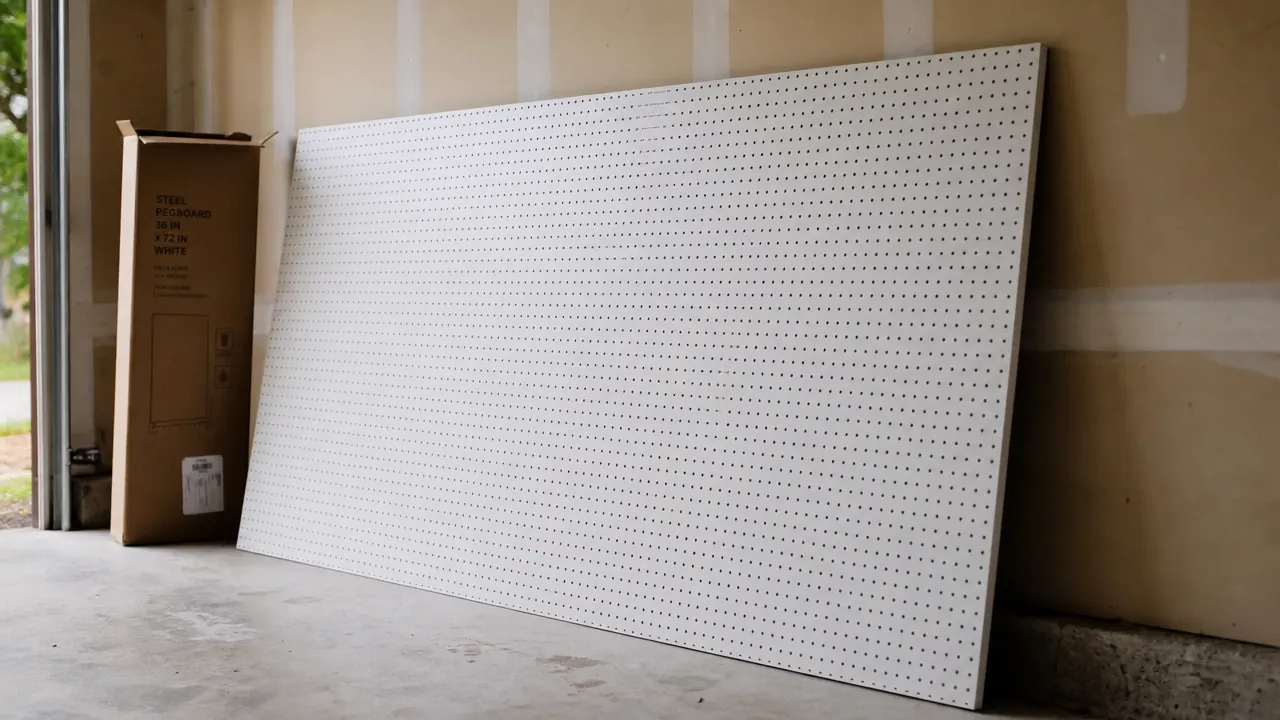
My neighbor paid roughly $200 for a Wall Control kit after seeing mine, got it home, opened the box, and called me two days later to complain that it felt unfinished. Not because anything was broken. Because the kit comes with nine hooks and two small bins for a 4-foot wall, and when you step back and look at it, it looks like a pegboard that is waiting for its actual accessories to arrive. That conversation is what pushed me to write this review.
The Wall Control 4-foot metal pegboard kit is a genuinely well-made product. I use one myself. But the listing does not tell you the full financial picture, it does not tell you who this purchase will disappoint, and it does not explain that you are buying into a proprietary accessory ecosystem with its own ongoing cost. If you are deciding right now whether $119 is worth it, this is the review you should read before you click Add to Cart.
The Quick Verdict
Genuinely excellent steel panels that will outlast any fiberboard alternative. But the base kit is a starting point, not a finished system. Budget at least $60 to $80 more in accessories before you will feel like you actually got what you paid for.
Amazon Check Today's Price →Still deciding? See today's price on Amazon before you read the rest.
The Wall Control 4 ft. metal pegboard kit includes the steel panels, mounting hardware, and a starter accessory set. What it does not include is everything you will want in month two. Read this review first, then decide if the system fits your budget and your wall.
Amazon Check Today's Price on Amazon →How I've Used It (and What My Neighbor's Experience Taught Me)
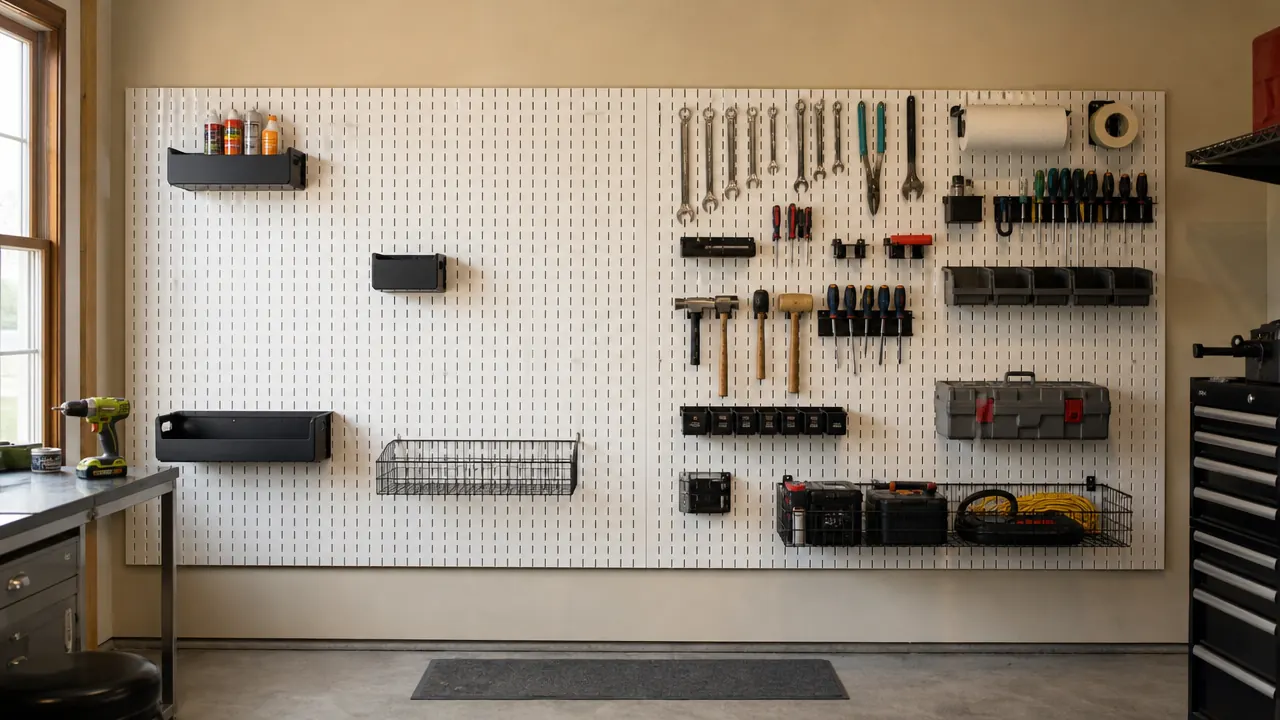
I mounted my Wall Control kit on the back wall of my garage and have been loading, unloading, and rearranging it ever since. My neighbor bought the same kit after seeing it fully loaded with locking hooks, dedicated holders for her cordless drills, a small shelf for spray cans, and a wire bin for rags. She saw the finished version and assumed that was what came in the box. It is not.
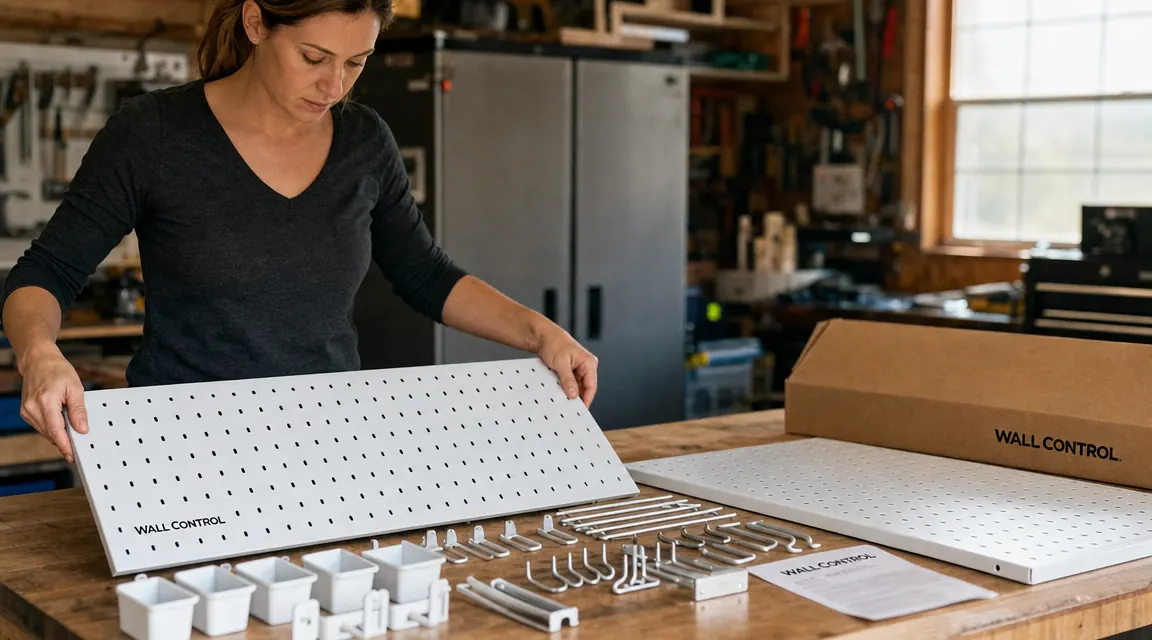
What comes in the box: two 2-foot by 32-inch steel panels, the flanged mounting hardware, a small assortment of standard hooks (not locking), and a pair of small plastic bins. That is it. My neighbor's version of my wall cost her the base kit price plus about $75 in separate accessory orders. Nobody tells you that part upfront.
I want to be clear: I still recommend this system for the right person. But you need the full picture before you buy it, not after.
What the Listing Photograph Does Not Show You
The main Amazon listing image for this kit shows a beautifully loaded pegboard wall, packed with tools, organized by zone, with a mix of bins, hooks, and shelves at every level. It looks complete. That is not what the kit contains. It is a lifestyle photograph showing a fully accessorized system, and most of those accessories are sold separately. This is not unique to Wall Control. Most storage products do this. But at $119 for a base kit, the gap between what you see and what you get is worth calling out.
The actual panels are about 24 inches wide each, not a full 4-foot run in a single piece. Two panels side by side make the 4-foot span. The seam where they meet is visible. On a loaded wall it disappears visually, but on a sparse wall early in the process, it looks like a gap. Some people mind this. Most do not. Worth knowing.
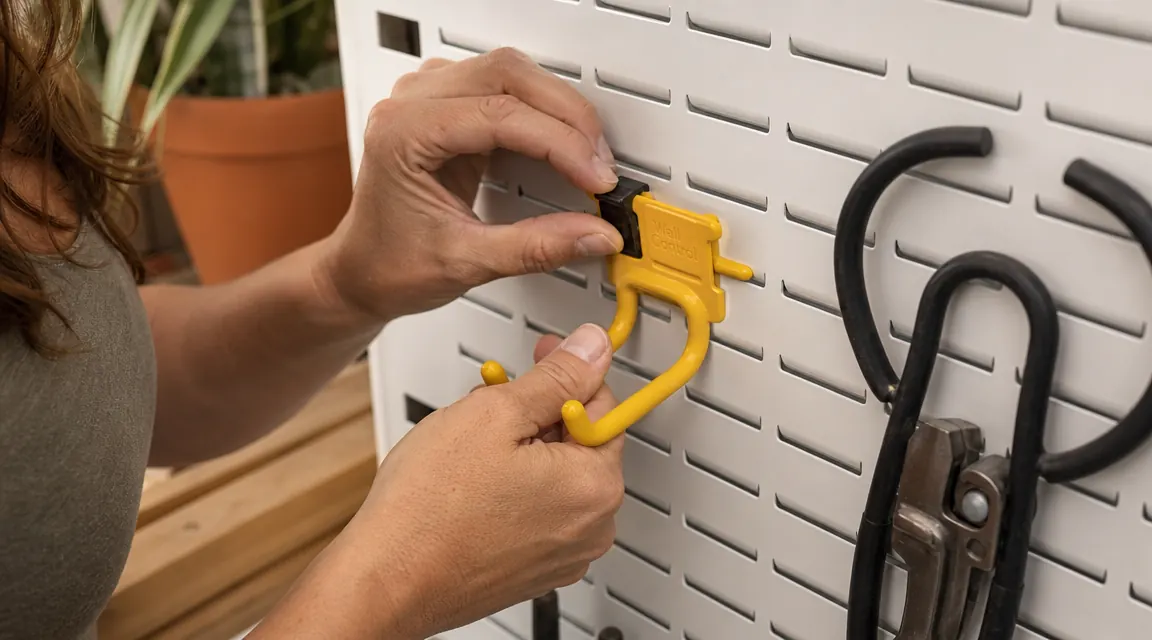
The second thing the listing downplays: the included standard hooks have no locking mechanism. They sit in the horizontal slots and stay put under normal loads, but under heavy or laterally biased weight (like a full pipe wrench set), they can walk. The locking hooks, which are the actual feature that makes Wall Control better than cheaper alternatives, are sold separately.
The Accessory Ecosystem: A Closed System With Real Costs
This is the section that will either make you feel good about your purchase or send you looking at alternatives. Wall Control uses a proprietary horizontal slot pattern. Their hooks and accessories are designed specifically for those slots. Third-party hooks made for standard 1/4-inch pegboard holes will not work here. You are buying into a closed ecosystem, and Wall Control knows it.
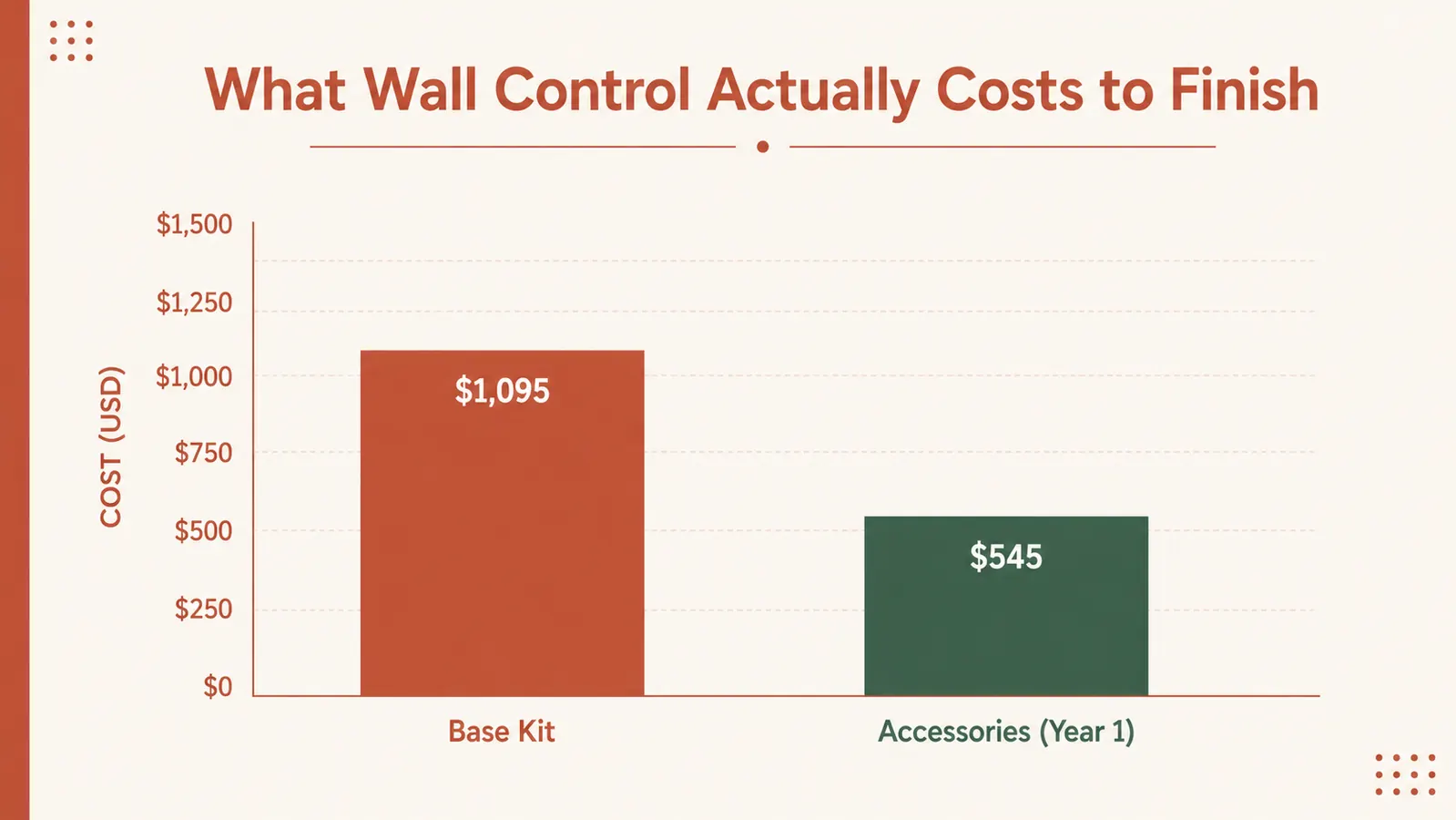
Here is the accessory math. Locking hooks come in sizes from 1-inch to 6-inch and run roughly $8 to $14 for a two-pack. A single shelf unit is about $18 to $25. The wire bins range from $12 to $20 each. A specialized holder for a cordless drill or a sanding disk is $15 to $22. If you want a loaded, organized wall, you are looking at adding $60 to $100 in accessories on top of the panel cost. Some people spend more.
This is not a flaw, exactly. The accessories are well-made, they match the panels, and the locking hooks are genuinely better than anything you will find in the generic pegboard aisle. But the total cost of a finished Wall Control system is closer to $180 to $220 than the base kit price suggests. Anyone comparing it to a $40 fiberboard pegboard needs to compare finished systems, not just the panel price.
One workaround: Wall Control sells larger starter bundles at a higher upfront price that include more accessories. If you know you want a full wall, those bundles can cost less per accessory than buying individually. Check the bundle options on the listing before you default to the base kit.
A finished Wall Control wall costs $180 to $220, not $119. Anyone comparing it to a $40 fiberboard sheet is comparing a starter kit to a bag of chips.
Who Regrets Buying This (and Why)
The one-star and two-star reviews on Amazon cluster around a few specific complaints. First: renters who bought it without realizing it requires drilling into studs. The mounting flanges need to hit wood, not just drywall. If you rent and cannot drill, this is not your product. A freestanding pegboard cart or a tension-rod closet system is. No amount of drywall anchors will safely hold a loaded Wall Control panel long-term.
Second: people who wanted a complete solution in one box at one price. The base kit is not that. If you open the box expecting to hang forty tools and walk away, you will be frustrated. You will have a good foundation and about nine hooks, and you will immediately start adding to your cart.
Third: people who have very light, informal tool storage needs. If your 'garage tools' are a hammer, a level, and a box of picture-hanging hardware, you are paying for far more system than you need. A ten-dollar fiberboard pegboard or a simple wall-mounted rail with a few hooks does everything you need for under $30. Wall Control is built for people with real tool collections that grow over time, not for someone who does minor home repairs twice a year.
What the Steel Actually Does (and Does Not Do)
The steel panels themselves are 26-gauge cold-rolled steel. They do not flex under heavy loads the way fiberboard does. They do not swell with humidity. They do not get soft at the mounting points over time. If you are in a garage with temperature swings, in a space without climate control, in a workshop where the wall gets bumped and loaded daily, the material matters. Fiberboard pegboard fails in those conditions faster than most people expect.
What the steel does not do: it does not hide tool marks, scratches, or scuffs as well as fiberboard does. The white powder-coat finish shows impact marks more visibly than a painted wood surface. After regular use you will see nicks and small scratches near the most-used hook positions. It reads as a working garage wall, not a magazine shot. For most people that is completely fine. If you want it to look pristine forever, you will need to be more careful than I am.
The horizontal slot design is genuinely better than hole-based pegboard for one specific reason: you never have to move a hook to a different hole position because the holes do not line up where you need them. The slots run the full width of the panel. Your hook goes exactly where you want it. Anyone who has fought with traditional pegboard spacing will appreciate this immediately.
What I Liked
- 26-gauge steel panels that will not bow, swell, or strip at mounting points under real tool loads
- Horizontal slot system places hooks anywhere along the full panel width, no hole-spacing compromise
- Proprietary locking hooks are genuinely better than any standard pegboard hook for heavy tools
- Powder-coat finish holds up to temperature swings and humidity better than fiberboard alternatives
- Panel-to-panel expansion is straightforward; the system grows with your tool collection
Where It Falls Short
- Base kit accessories are minimal; budget $60 to $100 more before the wall looks or works like the listing photo
- Locking hooks (the best feature) are sold separately, not included in the base kit
- Proprietary slot format locks you into Wall Control accessories only; third-party hooks will not work
- Requires stud mounting for heavy loads; not suitable for renters who cannot drill
- White powder-coat shows scuffs and tool marks more visibly than darker alternatives over time
How It Stacks Up Against the Cheaper Alternatives
The honest comparison is not Wall Control versus a $40 fiberboard sheet. It is Wall Control versus a finished fiberboard setup with hooks, versus a slatwall panel system, versus a French cleat wall. Each has a different cost-and-capability profile. If you want to dig into the slatwall comparison specifically, I wrote a full breakdown at the Wall Control vs. Slatwall head-to-head. Short version: slatwall looks cleaner in a finished space but costs more per square foot and the accessories are heavier. Wall Control wins for pure tool-wall utility.
The fiberboard comparison is simpler. Fiberboard costs less upfront, accepts generic hooks from any hardware store for pennies each, and looks fine for light duty. It fails over time in humid or temperature-swinging garages, the hole edges strip after a few years of repositioning, and it sags under real weight. If your garage is climate-controlled and your tools are light, fiberboard is a reasonable choice. If your garage is a working shop in a variable climate with serious tools, the Wall Control material difference is real and worth paying for.
Who This Is For
This system is for homeowners (not renters) with a real tool collection, at least one wall they can drill into, and a budget that covers both the base kit and a reasonable accessory order. It rewards people who plan their tool wall layout before they buy, because buying accessories in one or two targeted orders costs less than discovering gaps and ordering piecemeal over six months. The more tools you have and the more often you use them, the more the steel-and-slot system pays off. You can read a longer breakdown of the real-world daily use case in the long-term use review.
Who Should Skip It
Skip this if you rent and cannot drill into studs. Skip it if your tool collection is small and casual. Skip it if you want one purchase to fully solve the problem at a specific price. Skip it if you are comparing it to cheaper alternatives on panel price alone without accounting for the accessory ecosystem. And skip it if you need to cover more than about 8 to 10 linear feet on a tight budget. At that scale, Wall Control can get expensive fast, and a hybrid approach using Wall Control for your primary tool zone plus a cheaper shelf system for bulk storage might be the smarter call.
If your wall qualifies and your tool count is real, this is the panel that does not disappoint.
The Wall Control 4 ft. metal pegboard kit is the right foundation for a serious garage tool wall. Go in knowing the accessory budget, plan your hook layout before you order, and this system will still be on your wall a decade from now.
Amazon Check Today's Price on Amazon →